
LPF Materials
Specialization
It's not about owning more props. It's about knowing how to use them with intention.
Take the postures you already teach and make them work harder, smarter and for every body — without leaving the LPF framework.
For certified LPF Trainers & Level 3 graduates
Early bird: $650 $695 · ends Nov 22 (UK time)
Price: $695
Live online from anywhere or in person in Princeton, NJ

"I've used rings and balls for years. What could a props course possibly add?"
"My sessions work fine as they are. Why complicate them?"
"When a client can't kneel or bear weight on their wrists, I skip the posture and move on."
"I added a prop and the class felt more dynamic... but is it actually helping her breathe and align better?"
Props don't make a session better. Intention does.
Most LPF trainers already own the ring, the ball and the band. That's not the problem.
The problem is that, in LPF, one wrong angle changes everything: a ball placed without a purpose pulls the posture out of line instead of supporting it, and a band used only as resistance ignores where the tension is really going.
Same props. Completely different result.
And this isn't taught in Levels 1, 2 or 3. That's exactly why this specialization exists.
Four prop mistakes that even experienced trainers make
Using props in Pilates, yoga or fitness is not the same as using them in LPF. The goals are different, and so is what each angle, pressure and direction does to the breath and the posture.
A ball placed without a clear purpose
It ends up pulling the posture out of alignment instead of making it easier to find.
A Pilates ring squeezed with too much pressure
The result is compensation and stiffness instead of functional activation. The goal is to activate without rigidity.
A band used only as resistance
The direction of the tension, and how it relates to the posture as a whole, is ignored. That's where most of what a band can really do gets lost.
A foot on a block, with the pelvis left unadjusted
The starting posture changes, and the breath work loses its focus. The prop was meant to support the breath, not to compete with it.
It's not about having more equipment. It's about knowing how to use it with intention.
You can adapt LPF to any client. You just need to know what to use and when.
Your best LPF sessions haven't happened yet.
What each prop unlocks in your sessions
Just a taste of what you'll work with — and of the clients each one helps.
Fitball
- Pregnancy & postpartum: a safe instability that helps reawaken abdominal tone.
- Against the wall: wakes up the spine and trains a real 360° breath.
- Sitting or kneeling in front of it: reorganizes the body's axis and brings in the posterior chain.
Small soft ball
- Shoulder girdle: releases and relaxes it.
- Under the abdomen, face down: supports the breath and calms an overactive rectus abdominis, very common in Pilates-trained clients.
- Before the session: a preparatory release that makes everything that follows flow better.
Yoga block
- Against the wall: helps clients with hyperkyphosis feel their real alignment.
- Between the knees: helps hyperlordotic clients reprocess their posture and understand the feet-pelvis relationship.
- Under the hands in quadruped: takes load off the wrists, for example during pregnancy.
Elastic band
- Older and postpartum clients: activates the shoulder girdle and improves overall tone.
- Around the lower ribs: lets clients feel lateral and back expansion, the real 360° breath.
- Direction is everything: well applied it supports scapular control; badly applied it can aggravate it.
Pilates ring
- Between the arms: activation without rigidity, for clients who struggle to modulate how much tension to apply.
- Around or between the legs: works the glutes from new angles and gives feedback on leg alignment.
- On the chest in quadruped: tactile feedback to align the ribcage and spine, after pregnancy or from phone posture.
The wall
- Combined with props: adds challenge and feedback without leaving the LPF postural framework.
- Ball against the wall: squats and arm movements demand more from the legs while the abdominal vacuum is practiced.
- Block against the wall: real axial growth, without compensating through the lower back.
Level 1–3 postures you'll rework with props
Venus · Athena · Freya · Hestia · Hera · Gaia · Maya · Aphrodite · Demeter · Seline · Artemis · Themis
You'll be able to...
Progress or regress any LPF posture on purpose, instead of avoiding the ones that don't fit a client.
Adapt postures for clients with limitations (no kneeling, no wrist loading, limited ankle mobility) without overloading what's already compromised.
Add neuromyofascial stimulation with precision, not by trial and error.
Guide the breath with the right support, so the prop helps the vacuum instead of getting in its way.
Choose the right prop for each client and know when to bring it in: to make a posture easier, or to challenge it.
Bring variety and creativity to your classes without leaving the LPF framework or losing its essence.
Explain the why, backed by EMG research and by motor-learning science on external focus of attention.
Leave with a full LPF Materials Masterclass experience to bring into your own sessions.
A 15-hour hybrid course, 95% practical
December 12–13, 2026
Saturday & Sunday, 9:00am–4:00pm EST.
Online or in person
Join live from anywhere in the world, or in person at Activcore Physical Therapy & Performance in Princeton, NJ.
Certification
Your LPF Materials Specialization certification is awarded upon course completion.
How every prop module works
A short theory intro to the prop: its history, function and principles of use.
A prop-specific warm-up so your body understands what the prop asks for.
A complete LPF session where the prop is integrated coherently into the postures.
So you understand not only the how, but the why.
The science, kept essential
- Scientific rationale and EMG research supporting the use of materials in LPF
- Key criteria to guide progression, regression and variation
- Integration of sensory feedback and motor learning strategies
The part you'll feel in your body
- Fitball integration in static and dynamic postures
- Pilates ball adaptations
- Resistance bands for core activation and shoulder girdle work
- Yoga block variations to support alignment and challenge
- Magic Circle to enhance adduction and upper limb tension
- Wall work combined with materials
- Full LPF Materials Masterclass
Your props kit
- Fitball (large Pilates ball)
- Small soft Pilates ball
- One or two yoga blocks
- Pilates ring
- Long elastic band, light to medium resistance (150 cm / 5 ft or longer)
- Closed-loop elastic band
- Two myofascial release balls (tennis balls work too)
- A stable chair
- A Pilates pole (or a broomstick)
- A towel
Don't have everything yet? You'll get creative, affordable alternatives for each prop — and the wall and a chair go a long way.
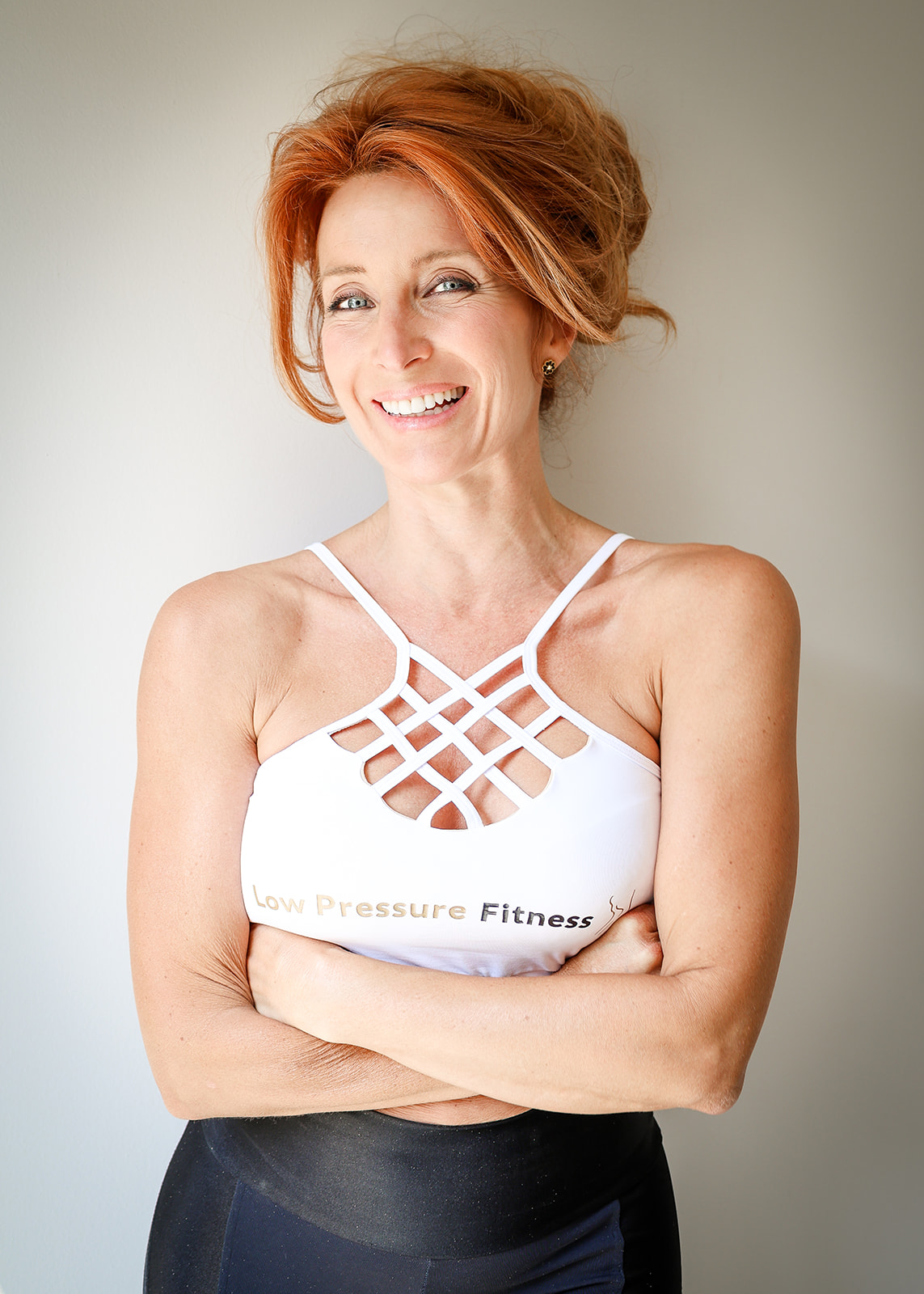
Alexa Marine
Low Pressure Fitness UK Director & LPF Master CoachEducation Specialist, +20 years Fitness Coach and LPF & Fascial Breathing International Master Coach.
Director of LPF UK and International Master Coach with more than 20 years as a fitness specialist and trainer of professionals. Holds a degree in Pedagogy and Education from the University of Barcelona.
Has contributed to health segments on channels like Fox 5 and Telemundo. Trains high-level clients around the world, from postpartum mothers to celebrities, world-renowned singers, and Olympia champions and other bodybuilding titleholders.
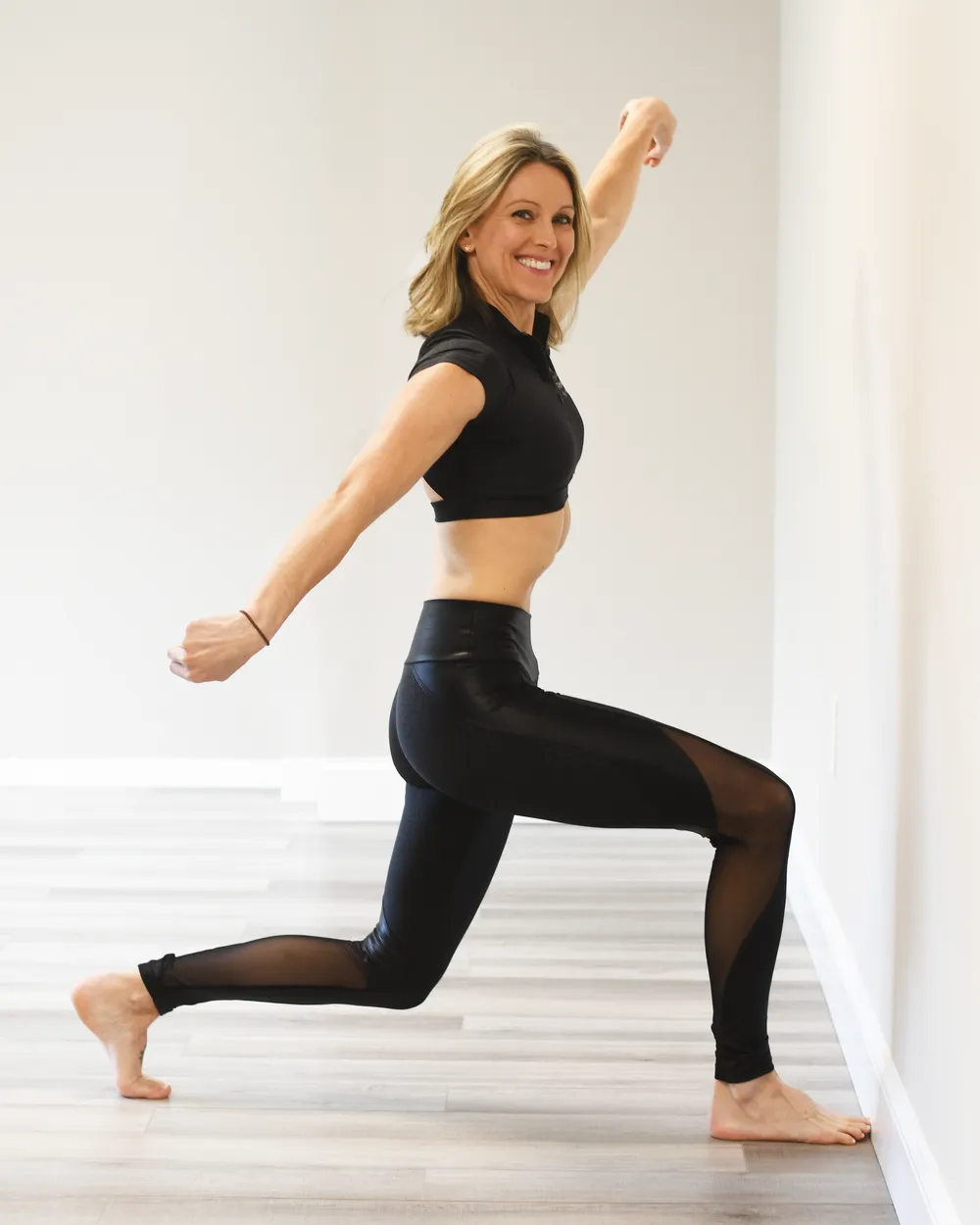
Becky Keller
PT, MSPT, PRPC, LPF-CT · LPF Master CoachPhysical therapist with over 25 years of experience and the last 15 dedicated to Pelvic Health Physical Therapy, at Activcore Physical Therapy & Performance in Princeton, NJ.
Took the first Low Pressure Fitness class in 2016, became certified in 2018, and has been teaching professional LPF courses internationally since 2020.
Mentors and supports the progression of LPF in the United States and among English-speaking LPF trainers. An educator, a motivator and a huge advocate for pelvic health.
The LPF Materials course was created by Dr. Tamara Rial, creator of the Low Pressure Fitness Training System, who has been developing it since 2018.
LPF Materials Specialization — December 12–13, 2026
15-hour hybrid course: live online from anywhere, or in person in Princeton, NJ.
Theory: the scientific rationale and EMG research behind props, criteria for progression, regression and variation, and sensory feedback and motor learning strategies.
Practice (95%): fitball, Pilates ball, yoga block, Pilates ring, resistance bands and the wall, plus a full LPF Materials Masterclass.
Certification awarded upon course completion.
Immediate access to the theory content as soon as you enroll.
Prerequisite: completion of LPF Level 3 or LPF Certified Trainer.
From Nov 23 the price goes up to $695.
Live online or in person · Dec 12–13, 2026
- Dec 12–13 · 9:00am–4:00pm EST
- Online or Princeton, NJ
Cancellation policy: refunds available up to 3 weeks before the course (minus 50% admin & theory content immediate access fee). Late cancellations receive course credit for a future edition. Full refund if the course is canceled by the organizers.